Choose The Right Removal Route
A redundant fuel tank can occupy useful yard space or hold up a plant-room refurbishment. Removing it involves more than collecting an empty container. The remaining product, hidden residues, connected equipment and route through the premises all affect how the work is approached.
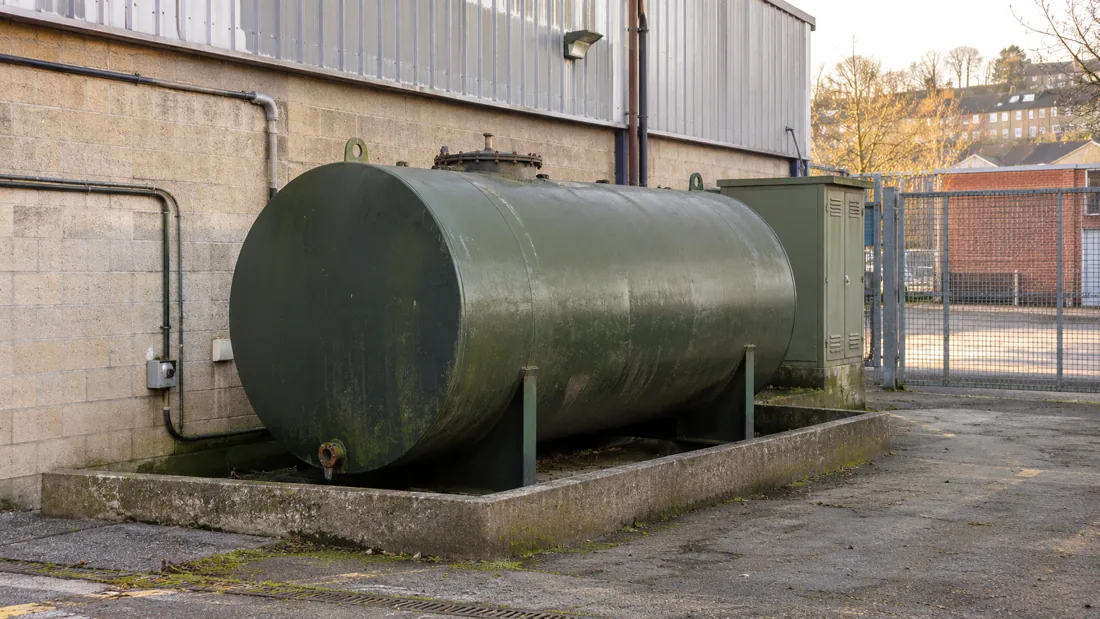
For Bristol commercial premises, the first decision is whether the tank can leave whole. A clear yard may allow a planned lift, while a basement tank may need controlled dismantling. Buildings often change around old equipment, so the opening used during installation may no longer exist.
Removal is usually worth considering when you need the space, want the tank physically gone from a redevelopment plot, or need access to inspect the ground beneath it. Where excavation would threaten adjacent structures, compare removal with assessed decommissioning in place before committing to either route.
Establish What Is Still Connected
Identify what the tank supplies before agreeing a shutdown. A redundant-looking vessel may share a fill line, return connection or transfer system with equipment that remains operational. Drawings are helpful, but the actual connections need checking against the site.
The scope should state which associated items come out. A quotation for the tank alone may leave old pipework, pumps, a fill cabinet or a concrete base behind. Tell us whether you want a clear footprint, a base retained for replacement equipment, or ground reinstatement after excavation.
Where continuity matters, discuss temporary storage or a separate supply arrangement before the old tank is isolated. Facilities staff, the fuel contractor and the party responsible for the connected plant need an agreed sequence and a named person who can authorise the interruption.
Remaining Fuel And Residues
Give an approximate fuel level even when the gauge reads empty. Water and sludge can remain below the usable fuel level, and deposits may cling to seams or internal partitions. These materials affect pumping, cleaning and the waste route.
Usable fuel may be recoverable into suitable temporary storage or another compatible tank, subject to its condition and the agreed destination. Keeping it apart from contaminated residues avoids turning a recoverable product into a mixed waste load. Fuel that cannot be reused needs its own assessed disposal route.
Do not open, cut or disconnect the tank to prepare for collection. Cleaning and atmosphere assessment form part of the professional method. A tank that has stood empty for years should still be treated as equipment with an unknown internal condition until assessed.
Access, Lifting And Controlled Dismantling
Photograph the complete route from the tank to the collection position. Include door openings, corners, overhead services, steps and changes in level. For outdoor work, show the proposed vehicle standing area and any drains, covers or soft ground that could affect positioning.
A whole lift needs a suitable lifting arrangement and an assessment of the tank, ground and surroundings. Controlled cold cutting may be selected where a whole tank cannot pass through an opening. Cold cutting still requires cleaning, isolation and atmosphere controls, rather than being an automatic permission to cut.
Where hot work is proposed, the method must address the residues and vapour hazard, relevant testing and site permits. HSE guidance on fire and explosion risk is a useful reference for your permit issuer. The contractor should explain why the selected method suits the actual location.
What Changes The Cost And Programme
Tank dimensions and construction matter, but access can have a greater effect on the programme than capacity alone. Thick steel, internal baffles, multiple compartments and a long carrying route add handling work. Underground tanks introduce excavation, buried services and reinstatement questions.
Fuel quantity, contamination, temporary storage and waste volumes also influence cost. Out-of-hours access, inductions, traffic management and restricted vehicle windows need pricing before the work starts. Do not compare two quotations until both describe the same final condition of the premises.
A useful enquiry includes the site postcode, approximate dimensions, fuel type, fuel remaining, photographs and any inspection report. Add your target date and whether it is linked to a lease handover, demolition programme or replacement installation. These dependencies help separate essential work from optional clearance.
Handover And Property Records
Request a written scope and site-specific risk assessments and method statements before mobilisation. A planned lift should have the relevant lifting arrangements documented. Agree how changes found during cleaning or excavation will be approved rather than leaving an open-ended removal instruction.
At completion, retain a description of the tank removed, photographs where agreed, and the appropriate waste documentation. Hazardous residues use consignment documentation where applicable, while other waste uses the relevant transfer record. Ask for disposal evidence and any gas-free record relevant to the work undertaken.
Removal does not by itself establish that surrounding soil is uncontaminated. If staining, odour or a known historic leak raises concern, identify whether environmental assessment is included or needs a separate appointment. Keep that distinction clear in a property sale or redevelopment file.
Fuel Tank Removal Questions
Can A Tank Be Removed From A Basement?
Basement tank removal may be possible through controlled dismantling when a whole tank cannot pass through the building. The assessment needs the access route, tank construction, ventilation and nearby occupied areas. Send photographs of every doorway and change of level so the removal method can be considered before a programme is agreed.
Can We Keep The Fuel?
Keeping the remaining fuel may be possible if its condition and the receiving storage are suitable. Tell us the product, estimated quantity and proposed destination. The agreed scope should separate reusable fuel from sludge, water and unusable product, and state whether temporary storage or filtration is needed.