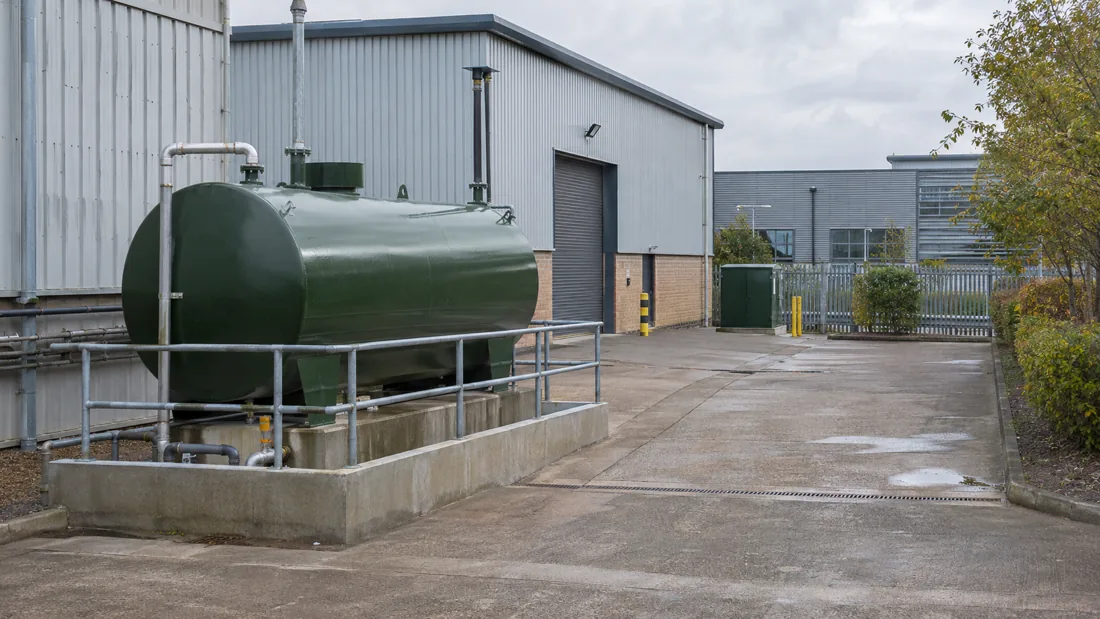
When Filling In Place Is Considered
Foam filling may be considered for a redundant fuel tank that is to remain in place after preparation. It is particularly relevant where extracting the vessel would involve difficult access or disturbance around structures. The assessment starts with whether retention is suitable, rather than assuming that filling is the simplest answer.
The work is a decommissioning option, not a repair to a tank that is still storing fuel. It also does not remove a tank from the property or establish that surrounding ground is clean. Those distinctions matter when a landlord, buyer or project engineer describes the intended outcome.
For commercial premises in Bristol, the choice often involves a balance between present access and future use. A buried vessel beneath a constrained yard may be expensive to excavate, but retaining it can affect later building work. The people responsible for the future development need to be involved before filling is selected.
Compare Filling With Physical Removal
Removal may be preferable where the footprint must be cleared, where the ground needs inspection, or where future excavation would otherwise encounter the retained vessel. Its practical limits include lifting access, nearby services and the effect of excavation on buildings or working areas.
Filling in place may be worth assessing when those constraints make removal difficult. It still needs access for preparation, removal of remaining contents and controlled placement of the selected material. A small visible cover should not be mistaken for proof that every part of the interior is accessible.
Ask the project team what loads, foundations or vehicle movements are proposed above or beside the tank. A filling certificate is not a structural design approval. Any requirement concerning support, bearing capacity or construction over the location belongs with a suitably qualified engineer and should be resolved before the method is accepted.
Preparation Comes Before The Fill
Remaining fuel, water and sludge have to be addressed as part of the agreed preparation. Foam is not a way to avoid managing contaminated contents. The method needs to describe isolation, cleaning, atmosphere controls and any access work necessary for the particular vessel.
Provide the previous product and any uncertainty about its history. A tank that changed use may contain residues different from its last recorded contents. If the condition is unknown, allow for assessment rather than assuming a standard preparation process can be priced from capacity alone.
Any proposal for tank entry should follow the confined-space framework described by HSE, with entry avoided where reasonably practicable. The contractor needs an appropriate method and emergency arrangements where entry is necessary. Site staff should not enter, cut or enlarge an opening in advance of that assessment.
Material, Geometry And Completion
The selected filling material and process must suit the vessel and the intended decommissioning outcome. Capacity, shape, internal partitions and access points influence planning. Give any drawings showing compartments, because an external photograph may conceal a more complicated internal arrangement.
The proposed method should explain how the contractor will address the vessel's configuration and record the material placed. If the measured or estimated volume differs from what is found, agree how that change will be handled. This is more useful than a quotation that offers an unexplained lump sum for filling.
Ask what needs to remain accessible after the work and what will be capped, removed or marked. The location of a retained tank should be recorded for future contractors. Updated site drawings and a clear asset entry can prevent a later team treating an old cover as an ordinary drainage feature.
What To Send And What Affects Cost
Send the site postcode, tank dimensions or capacity, construction, location and previous contents. Photographs should show the tank or covers, accessible connections and the route for preparation equipment. If underground, include any drawings of surrounding services and structures.
Give a realistic estimate of fuel remaining, including whether the gauge is reliable. Recoverable fuel may need temporary storage or transfer to another suitable tank. Water and sludge increase the preparation and waste-handling scope, even where the tank's nominal volume is modest.
Cost is influenced by preparation, material quantity, compartments, hose route and site restrictions. Limited working hours, security requirements or the need to preserve vehicle access may change the programme. Excavation to obtain access and subsequent making good should be stated separately if they are required.
Records For A Tank That Remains
Agree the completion documentation before the job starts. A useful foam-filling record identifies the tank, its location, the work performed, the material used and the quantity placed. Keep appropriate waste records for the contents removed during preparation alongside that record.
If the work is connected to a lease event or sale, ask the relevant adviser what evidence is required. The retained vessel should still appear in the property's information. Its presence does not disappear because filling has been completed or because the visible fill point has been removed.
Where a leak is suspected, commission the necessary environmental assessment rather than relying on a filling document. Filling does not extract pollution outside the tank. Keeping these responsibilities separate makes the handover more accurate for the next owner, tenant or contractor.
Before committing, confirm whether a future removal is likely. A filled tank can create a different excavation and disposal task later. Discussing the longer-term plan now may support a different decision from the least disruptive option for the current works.
Tank Foam Filling Questions
Does Foam Filling Make Ground Suitable For Building?
Foam filling does not by itself establish that ground is suitable for foundations or vehicle loading. The retained vessel, surrounding soil and proposed development need assessment by the relevant designer or engineer. Explain the future use when enquiring so the decommissioning method can be considered alongside those separate requirements.
What Paperwork Should We Request?
Foam filling paperwork should identify the treated tank, its location, the work completed and the material and quantity used. Ask for the applicable waste documentation for fuel and residues removed during preparation. Keep these records with site drawings, and retain any separate ground investigation or structural assessment alongside them.