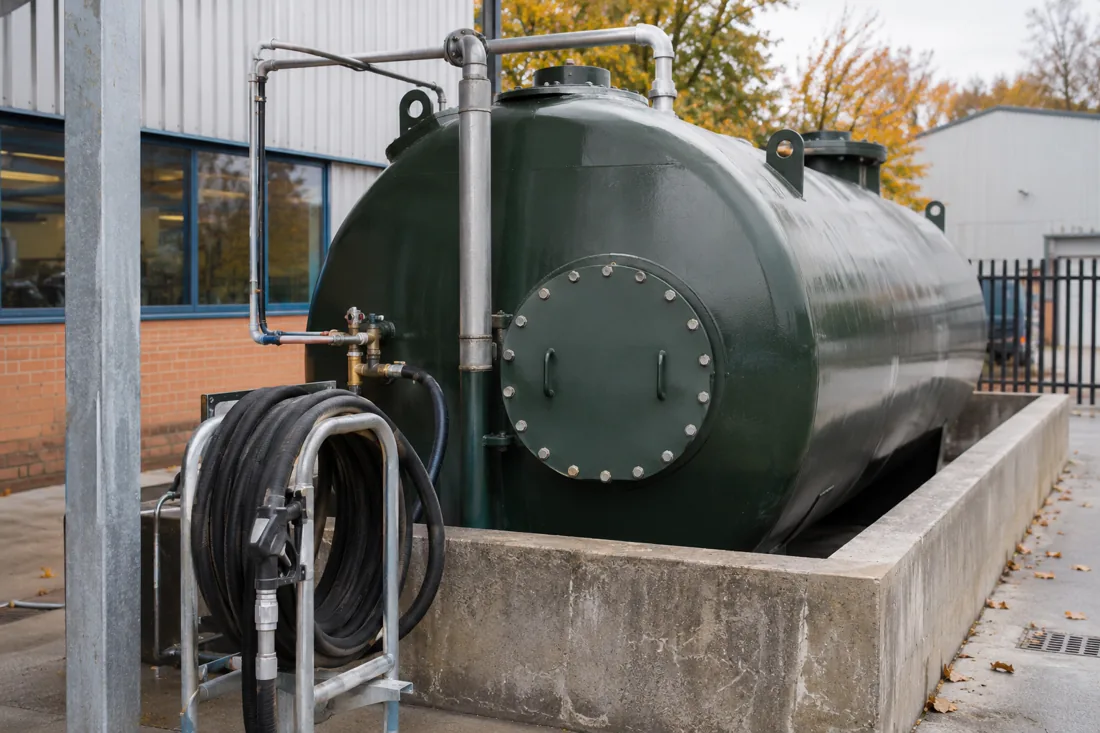
When Cleaning Is The Useful Intervention
Tank cleaning addresses contamination inside the vessel itself. It may be needed after water ingress, recurring filter blockages, a long period out of service or before an internal inspection. The aim is to remove accumulated material and establish the condition of the storage system before it returns to use.
Symptoms such as dark fuel or equipment faults are reasons to investigate, rather than proof that the tank needs a particular treatment. A blocked filter can have several causes. Sampling and maintenance history help distinguish a dirty tank from a fuel-quality issue or a fault elsewhere in the supply system.
For a commercial heating tank, the important dependency may be an occupied building. For a standby generator, it may be the period during which the backup supply is unavailable. Start with what the tank supports and the consequences of taking that storage out of service.
Cleaning Or Fuel Polishing?
Choose cleaning when deposits on the tank floor, walls or internal surfaces need removal. Choose an assessment for fuel polishing when the main concern is suspended contamination or water in otherwise recoverable fuel. The two jobs can form one programme, but they do different things.
Circulating fuel through filters cannot reliably remove a bed of sludge or material attached to inaccessible surfaces. Returning filtered fuel to a dirty vessel can reintroduce contamination. Equally, disposing of all the contents without checking their condition may overlook fuel that could be retained.
Where there are several connected tanks, describe the arrangement and which units can be taken offline separately. Transfers between tanks need capacity checks and a sequence that keeps contaminated material away from clean storage. Do not assume that spare capacity means another tank is a suitable temporary destination.
A Cleaning Method Matched To The Vessel
Construction, access openings, previous contents and internal partitions influence the cleaning method. Remote cleaning through existing openings may be suitable in some tanks. Where entry is proposed, it needs a separate assessment and controls for the confined-space risks.
HSE guidance says entry into a confined space should be avoided where the work can reasonably be achieved without it. Where entry cannot be avoided, a safe system of work and emergency arrangements are needed. The plan should consider isolation, atmosphere, ventilation and rescue before anyone enters.
This is professional work rather than a task for site staff to begin ahead of the visit. Do not remove a hatch or enter a tank to take photographs. External images and existing drawings are enough to start an enquiry, with closer assessment organised as part of the work.
Fuel Recovery, Water And Washings
The cleaning plan should identify where usable fuel goes while the tank is empty. A suitable holding arrangement must account for both quantity and product compatibility. If fuel recovery is part of the scope, agree whether filtration or additional assessment is needed before it goes back.
Water, sludge and washings need collecting rather than washing into a yard drain. Their classification and disposal arrangements depend on the actual material. The quotation should explain what waste volumes are assumed and how unexpected deposits affect the price.
An empty, cleaned tank can reveal corrosion or defects hidden by deposits. Agree what happens if cleaning exposes a condition that makes refilling inappropriate. An inspection finding may require repair or replacement advice, rather than automatic recommissioning simply because the cleaning stage has finished.
Prepare For A Commercial Cleaning Visit
Send the site postcode, capacity, material, stored product and estimated fuel level. Include photographs of the full tank, accessible fittings and the route from a vehicle standing area. Previous sample results, inspection findings and a record of recurring filter changes are particularly useful.
Describe parking restrictions, hose routes, pedestrian crossings and whether equipment must pass through an occupied building. Mention security checks, induction requirements and any permit issuer who must attend. These practical details influence mobilisation as much as the nominal tank size.
Arrange an agreed shutdown window and name the person responsible for connected equipment. If another contractor must isolate or recommission the plant, include that interface in the programme. Cleaning should not leave uncertainty about who may authorise the tank to return to use.
Price, Records And Follow-Up
Cleaning cost depends on access, contamination, product volume, tank geometry and the selected method. Confined-space controls, temporary fuel storage and waste handling can materially change the scope. A tank with inaccessible compartments can take more work than an open vessel of similar capacity.
Ask for site-specific RAMS, a completion record describing what was cleaned, and appropriate waste transfer or consignment documents. If atmosphere testing or preparation for later hot work forms part of the job, clarify the relevant records and limitations. Cleaning paperwork is not automatically a structural integrity certificate.
After cleaning, review likely routes for water ingress and sediment entry. Keep the findings with fuel purchase, filter and maintenance records so future changes can be recognised. Set future sampling and inspection around actual operating conditions rather than assuming every tank needs the same fixed cleaning interval.
Tank Cleaning Questions
Does Cleaning Include An Internal Inspection?
Tank cleaning can make internal surfaces available for inspection, but the inspection scope needs agreeing separately. A visual condition record is different from specialist thickness testing or a structural assessment. Explain what evidence your maintenance team, insurer or project engineer requires before the work is priced and scheduled.
Will The Tank Be Out Of Service?
Tank cleaning normally takes the affected tank out of service while its contents and deposits are removed. The shutdown should account for the equipment it supplies, temporary fuel arrangements and recommissioning. A site with several tanks may have different options from a building that relies on one shared supply.